
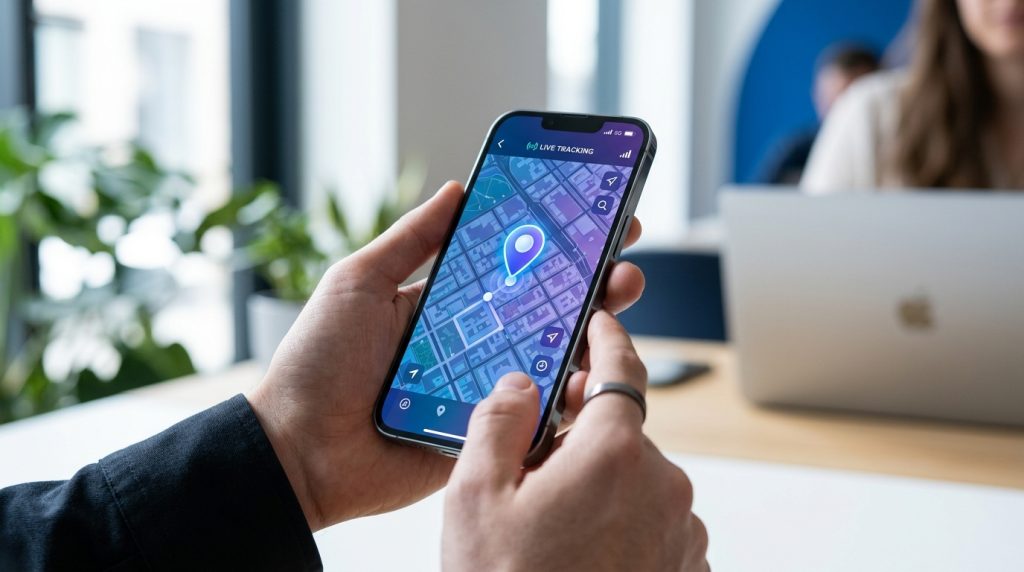
Is It Possible to Find a Device Location Using Only a Phone Number?
Few questions in digital safety generate as much confusion—and as many misleading promises—as whether you can track phone number location details in real time simply by typing digits into a search bar. The short, technically accurate answer is no: an isolated ten-digit phone number cannot broadcast its live physical coordinates over the public internet without an active software connection on the device itself.
Understanding why requires looking under the hood of cellular architecture. When a phone connects to a cellular network, the carrier uses Home Location Registers (HLR) and Visitor Location Registers (VLR) to route incoming calls and SMS traffic to the nearest base transceiver station. The carrier calculates signal strength and timing advance data across multiple towers to maintain call quality—a process known as cell tower triangulation. However, this raw telemetry stays locked inside secure carrier infrastructure, protected by strict telecommunications regulations and accessible only via formal law enforcement warrants or direct emergency 911 dispatch protocols.
The Reality of Free Online Number-Tracking Scams
A quick search online reveals hundreds of websites claiming they can “locate any mobile number instantly for free.” These platforms usually present an animated progress bar, fake terminal logs, and a map showing a vague regional circle. Once the animation finishes, users are prompted to complete a paid survey, sign up for a monthly recurring subscription, or download an untrusted file.
These websites do not have access to cellular carrier base station controllers or device GPS chips. The Federal Trade Commission (FTC) regularly warns consumers against providing payment details or personal data to unverified lookup portals. At best, these services simply query public databases for static registration information; at worst, they serve as phishing mechanisms designed to harvest your personal credentials.
What Static Phone Number Data Actually Reveals
When you run a standard reverse lookup on a phone number, the data returned is historical and administrative. Here is what legitimate telecommunication databases actually store:
- Telecommunications Carrier: The original network provider assigned to the block of numbers (e.g., AT&T, Verizon, Vodafone) or the current provider if the number was ported.
- Line Type: Whether the number belongs to a traditional mobile subscription, a fixed landline, or a Virtual Private Network/Voice over IP (VoIP) provider like Google Voice or Skype.
- Issuing Area Code & Exchange: The geographic city, state, or postal district where the phone number was originally registered.
- Registered Subscriber Name: Public white-pages records or credit-header data associated with billing accounts, which are often outdated or anonymized on pre-paid SIM cards.
None of these static data points reveal whether the device is currently in a school cafeteria, sitting on an office desk, or traveling along a highway. True real-time positioning demands an unbroken data pipeline between the phone’s internal sensors and an authorized dashboard.
How to Track Phone Number Location Using Monitoring Software
To pinpoint where a mobile device is right now, the connection must move from the static phone number to the actual operating system. Modern smartphones rely on Assisted GPS (A-GPS), GLONASS, Galileo satellite constellations, and local Wi-Fi Basic Service Set Identifiers (BSSIDs) to establish precision down to a few meters. Dedicated monitoring software translates this low-level hardware telemetry into an accessible digital interface.
When safety-conscious parents or fleet managers need reliable oversight, professional platforms bridge the gap between network identity and physical hardware. A high-grade monitoring solution sits directly on the operating system, receiving continuous coordinate packets and transmitting them securely over HTTPS to a web-based management portal.
Setting Up Real-Time GPS Tracking
Configuring a dedicated location client requires one-time administrative access to configure location services and network communication permissions. The general setup workflow follows a structured sequence:
- Account Provisioning: Register an account on the monitoring platform and select the operating system of the target device.
- Device Preparation: On Android, this involves enabling background location services and ensuring battery optimization settings do not suspend tracking processes. For iOS, device management profiles or provisioning profiles are configured to maintain a persistent background link.
- Client Installation: Download and install the verified client package directly onto the company-owned or child’s smartphone.
- Sensor Calibration: Grant high-accuracy location permissions (GPS + Wi-Fi scanning) so the client can pull coordinates even inside multi-story concrete buildings where satellite signals degrade.
- Dashboard Activation: Log in to the administrative control panel to verify the initial coordinate ping on the live map.
For those managing diverse hardware environments, solutions like SPYERA for Android and SPYERA for iPhone provide deep system-level integration that maintains location reporting without requiring frequent manual recalibration by the user.
Advanced Location Intelligence: Routes and Geofencing
Pinpointing an isolated latitude and longitude is only the baseline. Meaningful supervision requires temporal context—understanding where a device was three hours ago, how long it stayed there, and whether it crossed a predefined boundary.
- Continuous Route History: Instead of disconnected coordinate dots, robust tracking software records the complete breadcrumb trail with timestamps, speed calculations, and stationary dwell times. This allows parents to confirm whether a teen driver took a safe route home from an evening activity.
- Dynamic Geofencing: Administrators can draw virtual perimeter polygons around specific areas—such as school zones, residential neighborhoods, or commercial job sites. The system evaluates device coordinates against these boundary coordinates in real time.
- Automated Boundary Alerts: When a child leaves school grounds during class hours or an employee takes a company delivery vehicle outside an assigned sales territory, the system automatically dispatches an SMS or email notification without requiring constant dashboard monitoring.
Native OS Tools vs. Dedicated Location Trackers
Both Apple and Google provide built-in location tools designed primarily around device recovery and voluntary peer-to-peer sharing. While helpful for casual use, they differ significantly from dedicated monitoring platforms engineered for parental oversight and enterprise fleet accountability.
Apple Find My and Google Find My Device
Apple’s Find My network and Google Find My Device are powerful consumer-grade recovery tools. They leverage Bluetooth crowdsourcing and Google Play Services to display a device’s last known location on a map.
However, native operating system tools have built-in operational limitations that can complicate consistent monitoring:
- Prominent Visual Prompts: Native family sharing features routinely notify the user that their location is being actively shared, making them prone to accidental or intentional deactivation by teenagers.
- Battery Saver Disruption: Standard OS location sharing often reduces polling frequency when the battery drops below 20%, creating blind spots exactly when a parent might need to confirm a child’s whereabouts.
- Limited Historical Logging: Google and Apple native tools focus on the current or last known location. They generally do not maintain comprehensive, downloadable historical movement logs spanning weeks or months.
- Cross-Platform Friction: Sharing location seamlessly between an Android-using parent and an iPhone-using child using native tools often requires third-party accounts and non-native web dashboards with high latency.
Comparing Location Tracking Approaches
Choosing the right tracking strategy depends on your operational requirements, the age of the user, and the level of detail required:
| Capability | Public Reverse Lookup | Native OS Tools (Find My) | Dedicated Monitoring Software |
|---|---|---|---|
| Real-Time GPS Coordinates | No (Static Data Only) | Yes (Active Connection) | Yes (High-Precision Polling) |
| Historical Route Breadcrumbs | No | Very Limited | Full Timestamped History |
| Custom Polygon Geofencing | No | Basic Radius Alerts | Advanced Multi-Zone Alerts |
| Cross-Platform Compatibility | Universal (Web Only) | Ecosystem Locked | Unified Central Dashboard |
| Tamper & Setting Resilience | N/A | Low (User Can Toggle Off) | High (Administrative Control) |
With over two decades of engineering specialized client tools across changing mobile operating systems, our technical team at SPYERA has consistently observed that long-term safety depends on background stability. When location reporting is integrated into a comprehensive platform to protect your family, it provides continuity that casual social sharing apps cannot match.
Legal and Ethical Considerations for Location Tracking
Location data is among the most sensitive categories of personal information. Applying location-monitoring technology requires strict adherence to legal boundaries and a clear ethical framework that prioritizes safety over intrusion.
Parental Oversight and Minor Protection
In most jurisdictions, including the United States, Canada, the United Kingdom, and the European Union, parents and legal guardians have the full legal right to monitor the digital devices and physical whereabouts of their minor children. This authority is rooted in parental duty of care—protecting children from physical harm, digital exploitation, and high-risk environments.
Ethically, however, location monitoring works best when paired with transparent communication. Explaining to a child why a location tool is installed—framed around safety, rapid roadside assistance, and peace of mind rather than distrust—fosters mutual confidence. Setting clear boundaries together helps children build independent safety awareness while keeping a protective layer firmly in place.
Workplace Transparency and Asset Management
For business owners and operations directors managing field staff, mobile sales teams, or transportation fleets, tracking location is often essential for route optimization and asset protection. Doing so legally requires adhering to explicit operational guidelines:
- Company-Owned Hardware: Tracking software should be deployed strictly on company-purchased and company-provisioned mobile devices, not on personal employee hardware (BYOD), unless a dedicated work profile is segregated.
- Written Consent and Clear Policy: Employees must receive a clear, written Acceptable Use Policy outlining that devices contain location monitoring, defining the business purposes (e.g., dispatch efficiency, mileage verification), and specifying during what hours data is collected.
- Off-Duty Privacy: Business monitoring protocols should respect off-shift hours, ensuring employees are not subjected to personal surveillance outside of working commitments.
Best Practices for Maintaining Trust and Security
Whether monitoring a teenager’s first smartphone or managing a corporate fleet, data stewardship is paramount. Ensure that your monitoring dashboard uses strong, unique administrative passwords and multi-factor authentication (MFA). Avoid unverified third-party web tools that promise illicit surveillance without device access—these services are almost exclusively fraudulent and violate telecommunications privacy laws.
How SPYERA Can Help
SPYERA has helped parents and employers with track phone number location since 1999. Monitor calls, messages, locations, and app activity on Android, iPhone, Windows, and Mac — used responsibly, with consent, on devices you own or are authorized to monitor.
Frequently Asked Questions
Can you track a phone number location in real time for free without installing software?
No, real-time live GPS tracking requires software running on the physical phone or explicit carrier-level network access. Websites promising instant, free live GPS tracking from just a typed-in phone number are marketing funnels or data-scraping scams.
What information does a reverse phone lookup actually provide?
A reverse phone lookup reveals static registration records, including the registered owner’s name, carrier, line type (mobile, landline, VoIP), and general billing city or ZIP code. It cannot display the device’s live physical whereabouts or real-time movement.
How accurate is GPS location tracking compared to cell tower triangulation?
Direct on-device GPS combined with Wi-Fi positioning is accurate within 5 to 15 meters outdoors. In contrast, cell tower triangulation relies on signal delays between base stations and is only accurate within a radius of 500 meters to several miles.
Is it legal to track someone’s phone location?
Tracking is legal when monitoring your minor children as a parent or legal guardian, or when tracking company-owned devices with proper employee notification and consent. Tracking an adult on their personal device without knowledge or legal consent is strictly prohibited by law.