
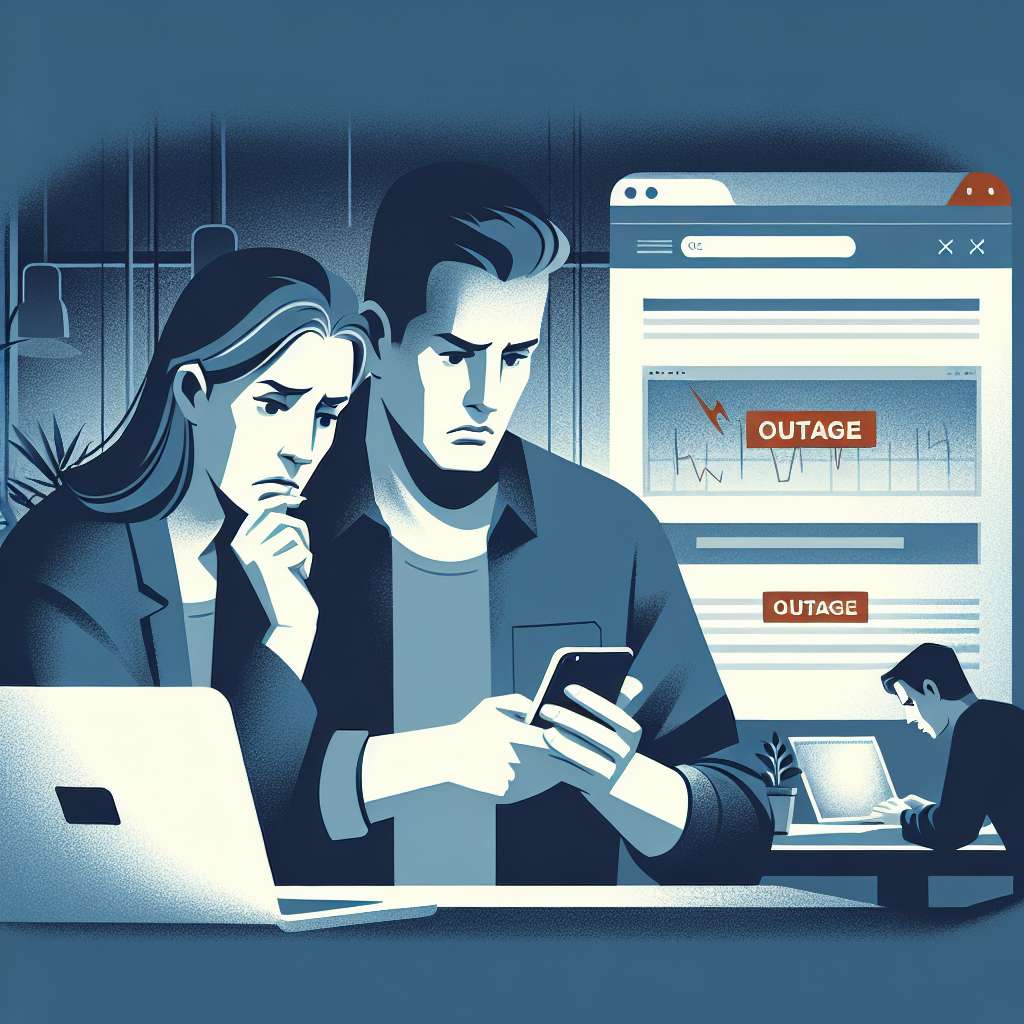
Cloudflare outage: practical steps to protect your family and business
Why This Matters
Major internet infrastructure outages can disrupt essential services and expose operational gaps. When providers that support a sizable portion of the web fail, families, schools and small businesses feel the effects immediately.
What Happened
Cloudflare acknowledged a significant outage that caused many websites and apps to fail for thousands of users. The company attributed the incident to a configuration file intended to filter threat traffic. That file did not behave as expected and triggered a crash in the software that handles broader customer traffic.
Services affected included social platforms and popular tools such as X and ChatGPT for some users. Cloudflare said there is no evidence the outage resulted from an attack. The company apologised and said recovery was underway, though intermittent errors might persist as services returned online.
Key Takeaways
- Large providers are convenient but can become single points of failure for many sites.
- Outages often stem from configuration or software faults rather than attacks, though both are possible.
- Relying solely on one vendor increases operational risk for critical services.
- Prepare incident response and communication plans for when external dependencies go offline.
Background & Risk Surface
Cloudflare is a major web infrastructure provider. It offers services such as content delivery, DNS, DDoS protection and web application firewalls. An estimated 20% of websites use Cloudflare services in some form. That level of market share means an issue with their systems can affect a wide array of apps and sites simultaneously.
The most common risk surfaces in such outages include DNS resolution failures, content delivery disruptions, and access issues for APIs that depend on the provider. Many organisations delegate DNS and edge security functions to cloud vendors to simplify operations. That convenience reduces complexity but concentrates risk.
Typical misconfigurations that create outages include incorrect firewall rules, changes to routing policies, and automated configuration updates that were not validated in testing environments. When a configuration intended to filter hostile traffic fails, it can have cascading effects on legitimate traffic. If confirmed as a configuration fault, this incident underscores the need for change-control and staged deployments.
Platforms most affected are those that rely on third-party edge services for availability and security. Social networks, collaboration tools, video conferencing services, and smaller customer-facing sites are common examples. For organisations that outsource hosting or rely on managed DNS, a provider outage can look like an internal outage to end users. The result can be lost productivity, reputational damage, missed transactions, and temporary loss of communication channels during a crisis.
Why It Matters for Families & Small Businesses
When high-profile sites and services become unreachable, everyday routines are disrupted. Parents, for example, may not be able to access school portals, communication apps, or cloud-based homework tools. Small businesses can lose customer access to e-commerce, booking systems, or remote collaboration platforms. The outage also highlights data accessibility and privacy considerations.
From a privacy perspective, outages sometimes prompt rushed workarounds. Staff or parents might share passwords or use personal accounts to restore access. Those shortcuts increase exposure. Always use secure, approved recovery paths and document steps taken during the incident. Keep in mind that backup systems and logs may be stored by third-party providers. Ensure those services meet your data protection requirements and have appropriate retention and access controls.
Account security is also relevant. During outages, password reset flows and multi-factor authentication systems can be disrupted. Have secondary contact methods and recovery codes stored securely. Make sure shared accounts have clear ownership and recorded consent. For organisations, this incident is a reminder to include consent, compliance, and lawful monitoring in policies. Monitoring and parental controls should be deployed within legal frameworks and with explicit consent when required.
Action Checklist
For Parents & Teens
- Keep a printed or securely stored list of critical accounts, recovery codes, and emergency contacts. Do not share passwords via chat or email.
- Establish alternate communication plans for school notifications. Include phone numbers and SMS options for urgent messages.
- Teach teens to avoid risky workarounds, such as installing unknown apps or sharing credentials, during outages.
- Enable and safely store multi-factor authentication recovery methods. Use authenticator apps rather than SMS where possible.
- Maintain up-to-date backups of important schoolwork in at least two locations, one of which is not dependent on the affected provider.
For Employers & SMBs
- Audit third-party dependencies. Maintain a simple inventory of providers for DNS, CDN, auth, and payment systems.
- Deploy redundancy where feasible. Use secondary DNS providers and alternate failover routes for critical services.
- Test configuration changes in isolated staging environments before applying them to production. Use feature flags and gradual rollouts.
- Implement robust logging and monitoring. Ensure logs are stored off-site or with a different vendor to preserve visibility during outages.
- Run regular incident response drills that include vendor outages. Exercise customer communications, internal escalation, and fallback procedures.
- Enforce least privilege for administrative access. Review access logs and perform periodic access reviews to reduce blast radius from misconfiguration.
For Schools
- Confirm alternate learning paths if cloud tools are unavailable. Prepare offline lesson packs and printed assignments for short-term outages.
- Maintain parent contact lists independent of online portals. Use SMS or phone trees for time-sensitive alerts.
- Train IT staff on emergency DNS and authentication procedures. Keep vendor support contacts readily accessible.
Trend
In recent months, multiple major cloud providers have experienced service interruptions. These events highlight the scale of dependency on a small number of infrastructure vendors. Organisations are increasingly treating provider availability as part of their operational risk profile and building contingencies accordingly.
Insight
The safest posture balances convenience with resilience. Centralising security and performance at a single provider simplifies operations. But it also concentrates risk. Adopt a layered approach: use staged changes, independent monitoring, and diverse failover options. Plan communications in advance so users know what to expect during outages.
How SPYERA Helps
SPYERA offers monitoring features designed for lawful, consent-based oversight. For parents, SPYERA can provide activity reports, alerts for unusual behaviour, and remote checks that help confirm whether devices are online or experiencing issues. Employers and schools can use SPYERA to monitor device uptime, receive notifications about app availability, and generate compliance-friendly logs.
SPYERA supports remote configuration checks and scheduled reports. These features can help you detect when critical services are failing for a subset of users. Importantly, SPYERA is intended for legitimate monitoring with explicit consent. Always follow local laws and workplace or institutional policies before installing or using monitoring software.
FAQs
- Will an outage like this expose my private data?
Generally, outages disrupt access rather than expose data. However, accidental configuration errors can affect access controls. Review logs and vendor statements if you suspect data exposure. - Should I switch providers after an outage?
Not necessarily. Evaluate your risk tolerance, vendor SLAs, and the cost of redundancy. Often a hybrid approach with secondary services is more practical than a full migration. - Can monitoring software help during outages?
Yes. Monitoring tools provide visibility into device connectivity and app availability. They help you determine whether an issue is local, a device problem, or an external provider outage. - Is it legal to monitor employee or child devices?
Monitoring must comply with local laws. For employees, follow transparency and consent requirements. For children, parents usually have broad rights, but regional privacy laws may impose limits. Always obtain consent and document policies.
Closing CTA
Outages remind us to prepare for disruption and to protect access and privacy. Consider SPYERA for lawful, consent-driven monitoring to gain visibility into device health and app availability. Use monitoring only within legal and ethical boundaries to help your family, school, or business stay resilient when third-party services fail.